

On Capturing a Queen: The Image of Anne Boleyn
We talk to Wolf Hall Weekend speaker Dr Owen Emmerson about this unique exhibition at Hever Castle

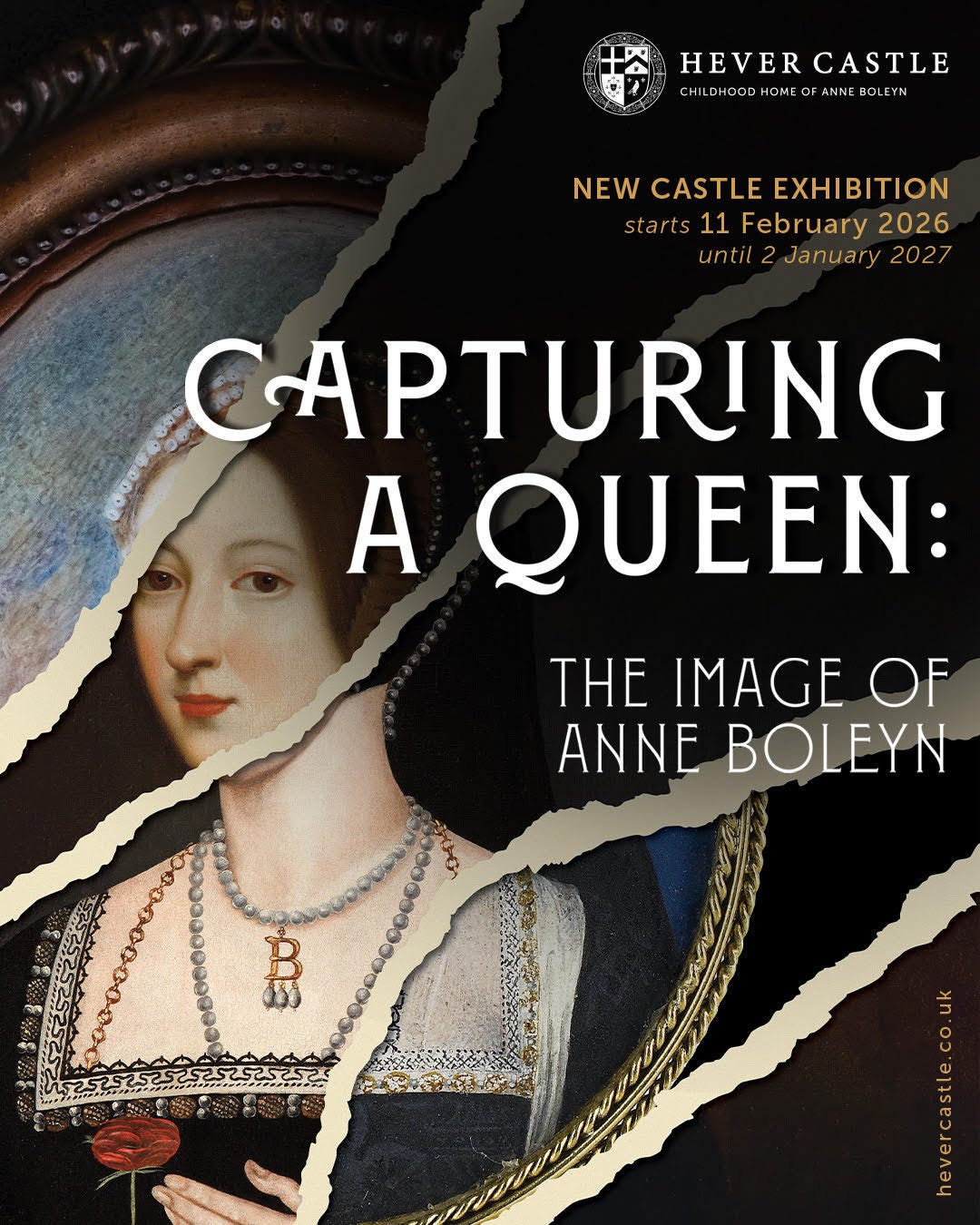
We’re delighted to welcome back Owen Emmerson as a major new exhibition Capturing a Queen: The Image of Anne Boleyn opens at Hever Castle (11 Feb 2026 – 1 Jan 2027) — the first time so many portraits connected to Anne have been gathered together. We caught up with Owen to delve behind the scenes and explore the choices made, and how the visual record connects to the contemporary stories told about Anne.

WHW. Welcome Owen, and thanks for taking the time to talk to us about Capturing a Queen, which assembles more portraits of Anne Boleyn than have ever been shown together. What were the key criteria for selecting the works on display, and were there cases where attributions were too uncertain to include?
Dr Owen:
The guiding principle for the exhibition was curiosity and a desire to understand not just what Anne looked like, but to understand how and why subsequent generations saw her. Anne Boleyn is one of the most recognisable figures in English history, yet paradoxically one of the least securely identified in visual terms. Rather than attempting to present a single, definitive “true” face, though we have excitingly identified two new contemporary images of her - we wanted to show visitors how Anne’s image was constructed, repeated, adapted, and sometimes misunderstood over time.
The works selected fall broadly into three categories. First, portraits that can be shown, through dating, provenance, or material analysis, to be plausibly connected to the 16th century, and close to Anne’s lifetime. Secondly, images produced in the decades after her death, particularly during her daughter Elizabeth I’s reign, which tell us a great deal about how Anne’s image was rehabilitated and politically useful. And finally, later interpretations that reveal how Anne’s appearance became increasingly romanticised and mythologised, to suit the expectations of later generations.
There were certainly works we couldn’t include. In some cases, traditional attributions simply could not stand up to scrutiny once examined closely. However, we consciously included some of these works to demonstrate how her image has been understood across time, and how and why it morphed. This is not about diminishing Anne’s visual legacy, but about strengthening it. The exhibition is as much about questioning long-held assumptions as it is about celebrating remarkable survivals.
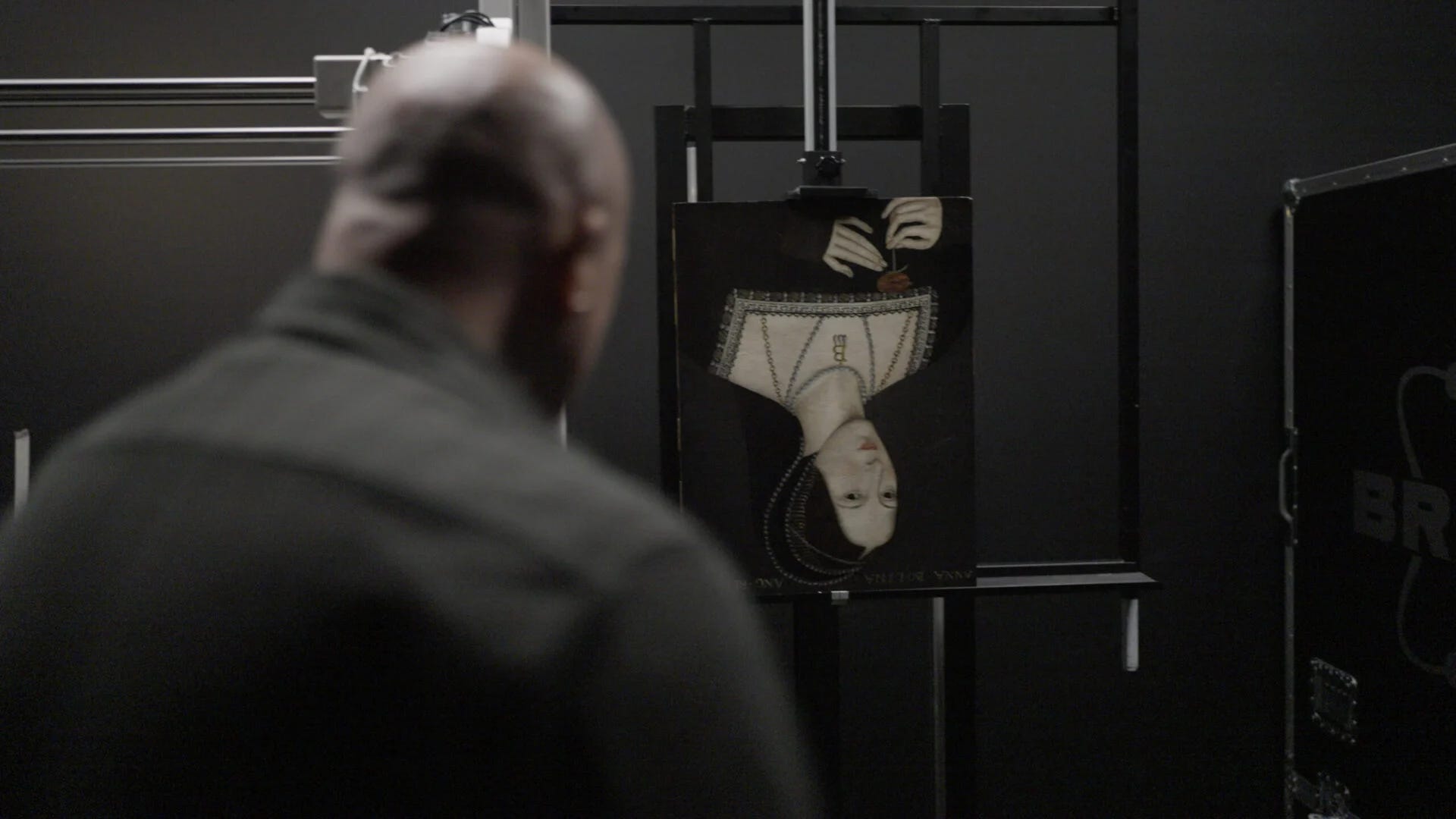
WHW. Can you tell us what inspired you to conduct new scientific analysis of the famous “Hever Rose” portrait, and how has this reshaped the narrative of Anne’s visual legacy?
Dr Owen:
The Hever Rose portrait has always been visually compelling, but for many years it sat in an uncomfortable grey area: admired, reproduced, and discussed, yet never properly interrogated using modern scientific methods. In truth, it has been a desire of mine to have it scientifically examined for many years. What prompted the new analysis was a growing sense that we were asking the wrong questions of it. Instead of asking “Is this Anne Boleyn, yes or no?”, we began asking “When was this painted, how was it made, and what does that tell us?”
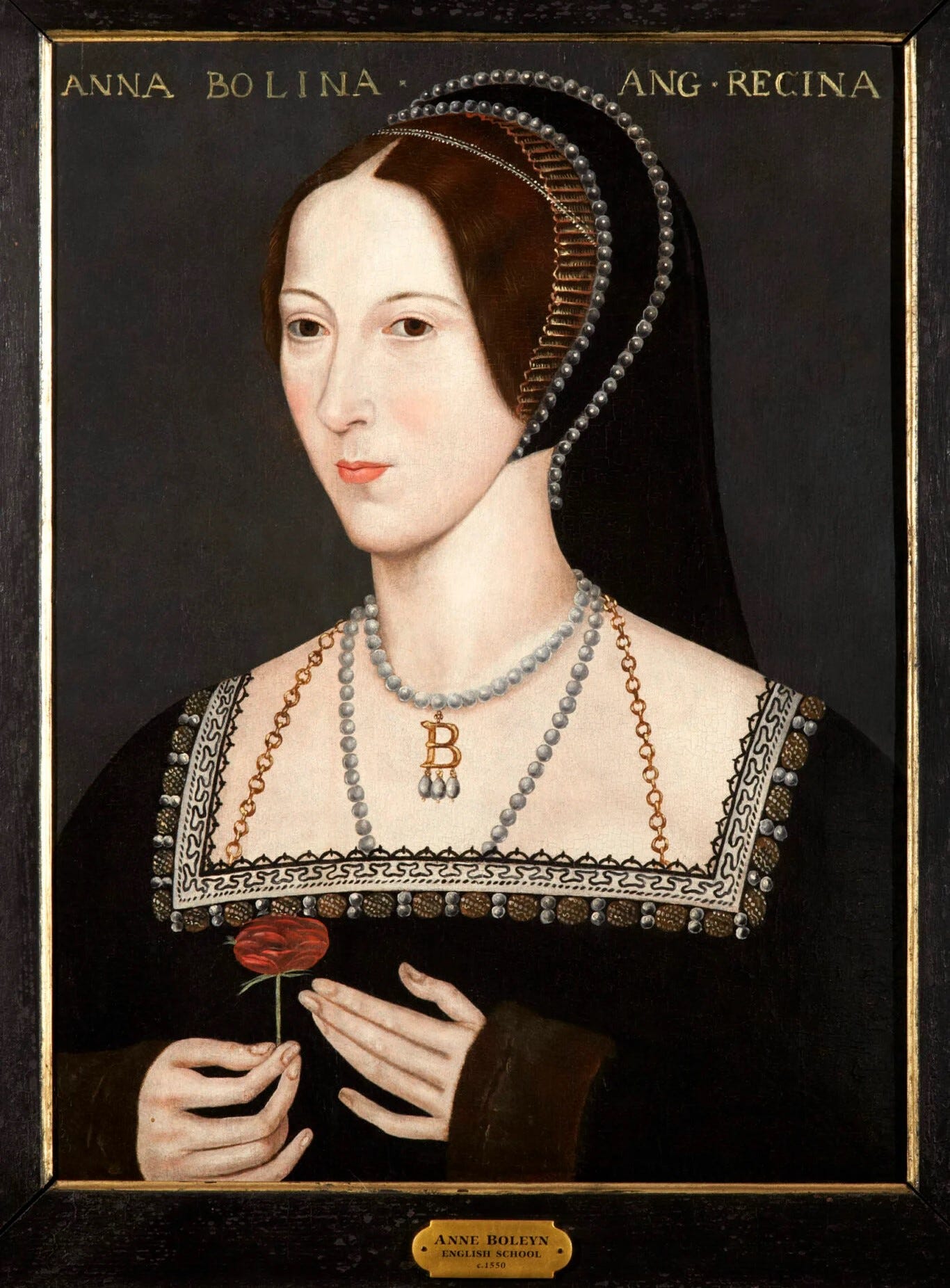
The results were genuinely transformative. By combining dendrochronology, pigment analysis, and multi-modal imaging, we were able to demonstrate that the portrait was produced at a pivotal time in her daughter’s reign. The materials and techniques align perfectly with later Elizabethan copying tradition, and we now know that the panel it was painted on dates to c.1583, making it likely the oldest known panel portrait of Anne known to survive. This of course may well change in the future as precious few of the surviving panels of Anne have been scientifically dated, including the majority of those that we are exhibiting. One of them may well date to closer to Anne’s lifetime.


What excited me most about the analysis was that the artist clearly made a decision to change the composition, firstly drawing the body and arms disappearing from the bottom of the composition, and then sketching in Anne’s hands. This is therefore likely the first time that Anne’s hands appeared in this pattern of portraits. Why this is significant is answered by a theory posited by the historian Helene Harrison, who asked whether Anne’s hands in this portrait might have been added to refute the calumny being propagated by the recusant Catholic, Nicholas Sander, who claimed that Anne Boleyn had six digits on one of her hands. The mechanical nature of the added hands in the Hever Rose portrait, rather awkwardly showing each of Anne’s ten digits, now adds weight to Harrison’s astute theory. This was a visual refutation of the slander spread by Sander in an attempt to undermine Elizabeth’s legitimacy.
What is also exciting is that the underdrawing shows a confident, unbroken like, strongly indicating that it derived from a pre-existing pattern, taking us closer to Anne. The Hever Rose is no longer just an attractive outlier; it becomes a serious piece of evidence in understanding how Anne’s likeness may have been recorded during her lifetime or shortly after.
WHW. Hilary Mantel’s Wolf Hall trilogy has profoundly influenced contemporary perceptions of Anne Boleyn, portraying her as politically astute and intensely aware of image and reputation. How do you think this literary persona compares with the Anne that emerges from the exhibition’s portraits?
Dr Owen:
Mantel’s Anne is a woman who understands the power of appearance, gesture, and performance, and that is something the portraits quietly reinforce rather than contradict. What struck me most while working on the exhibition is how consistent Anne’s visual language appears to have been. The repetition of certain motifs, particularly the B pendant, the French hood, and the controlled presentation of her face, suggests a woman who understood that image was not decoration but communication.
That said, the portraits also complicate the literary Anne. They resist the idea of her as simply dazzling or dangerously beautiful. Contemporary descriptions describe her as striking rather than conventionally pretty, and the portraits reflect that restraint. There is a confidence there, but also a certain reserve.
Where they align most closely is in Anne’s awareness that she was being watched. Whether through paint, jewellery, or emblem, Anne curated how she appeared to others. The portraits do not shout this, but they do show it, and that quiet consistency may be closer to the reality of court life than even the most brilliant historical fiction.
WHW. Can you choose a couple of your favourite portraits that you’ve brought in for this exhibition and explain why you think they are particularly significant?
Dr Owen:
The Hever Rose portrait is an obvious choice, not simply because of the new scientific findings, but because it forces us to rethink our confidence in long-established narratives. It is a reminder that familiarity is not the same as understanding. The portrait’s scale, delicacy, and material sophistication suggest intimacy rather than pure propaganda, and that alone makes it extraordinary in the context of Anne’s story.
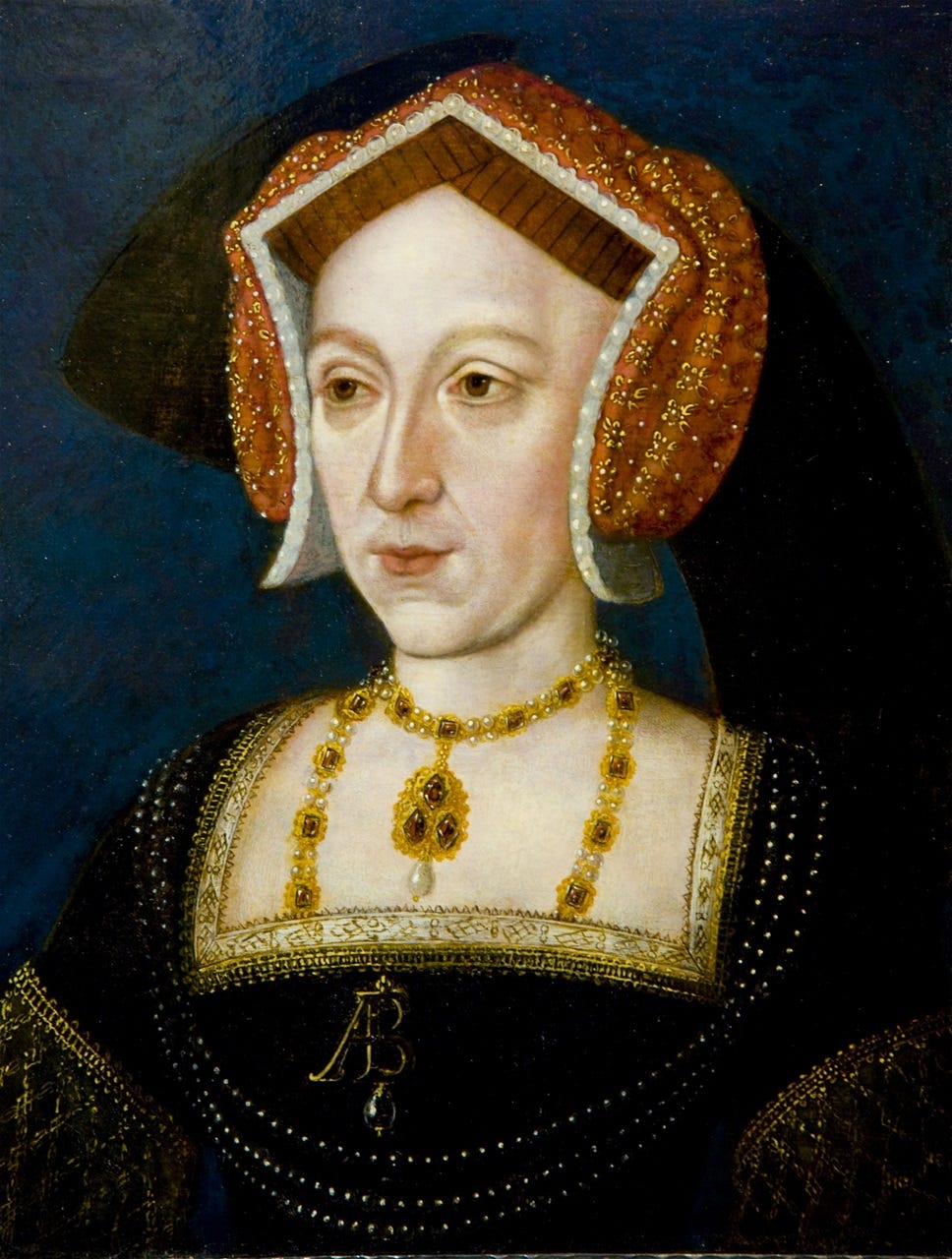
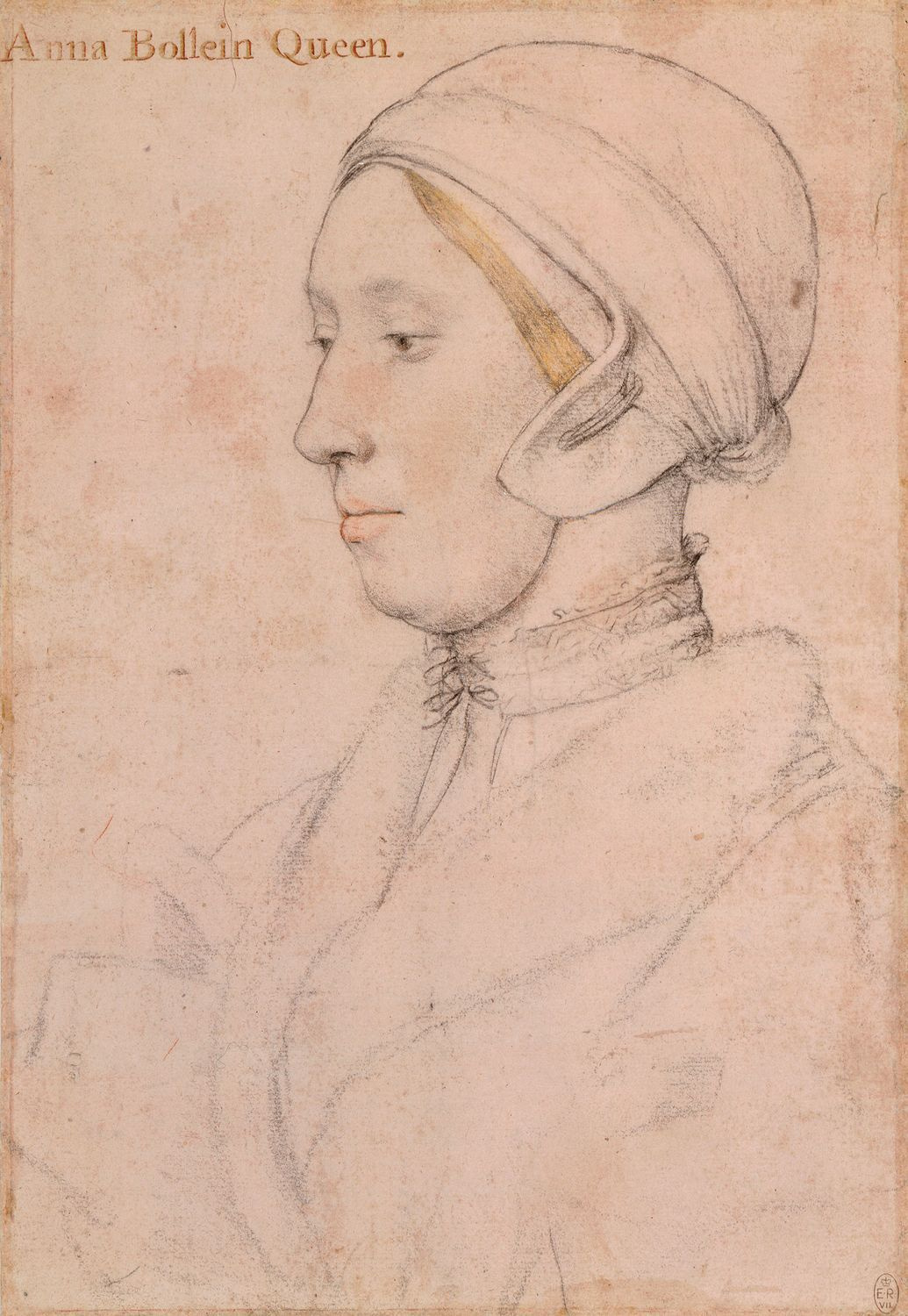
The other would be the portrait traditionally known as the Nidd Hall type. What makes it so important is that it perhaps the closest expression in paint of the contemporary image of Anne found on the 1534 medal, now known as the ‘Moost Happi’ medal. Tragically, so much wood has been shaved from the back of the panel to accommodate a supporting cradle that dendrochronology (the dating of the panel) has been deemed impossible. This isn’t an idealised portrait of Anne, and it is rarely cited as being a favourite of many people, but since it so closely aligns with the contemporary medal, and as it is entirely consistent with the Winsor sketch of Anne Boleyn by Hans Holbein the Younger, I have a confidence that it might well be one of the closest likenesses of Anne in paint.
WHW. Finally, how do you think Capturing a Queen will encourage visitors to rethink their assumptions about her appearance and how it was recorded over time?
Dr Owen:
I hope visitors leave with a greater sense of nuance. The question “What did Anne Boleyn really look like?” is not an unreasonable one to ask, but it is an incomplete one. What matters just as much is why so many different answers to that question exist.
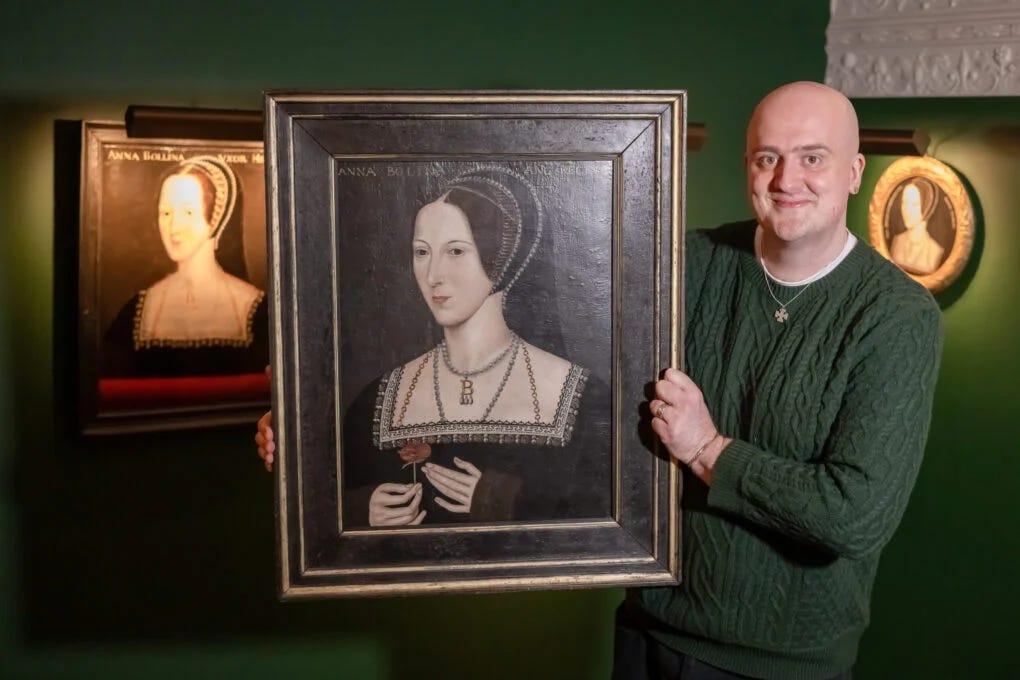
By placing portraits side by side, rather than isolating them, the exhibition shows how Anne’s image was shaped by politics, religion, memory, and later nostalgia. Visitors can see how a face becomes a symbol, and how that symbol shifts depending on who is doing the remembering. In that sense, the exhibition is not just about pinning Anne down, but about understanding her afterlife changed her appearance.
Anne’s appearance mattered in her own lifetime, and it has mattered ever since. What Capturing a Queen offers is the chance to see that process unfolding across five centuries, and to recognise that uncertainty is not a failure of history, but part of what makes her such a compelling figure to study. What we are most excited about is hearing our visitors thoughts on the question. Having considered the contemporary descriptions of Anne’s appearance, and seen so many iterations of her image, we are actively asking our visitors to join the conversation and let us know which portrait pattern they feel closest fits the Anne of history. This exhibition is certainly not the final word on Anne’s image. It is part of a conversation that we hope will continue for many years to come, and leads to further scientific and archival research which helps us get closer to discovering what Anne truly looked like.
We are honored Dr Owen Emmerson will be speaking at our Wolf hall Weekend 2026 in June.