

How Cromwell’s choice shaped a queen.
The appointment of Kat Ashley and the making of Elizabeth I

We are delighted that Rosemary Griggs, a West Country historian, researcher, writer and performer, will be presenting during our afternoon Wolf Hall Weekend event session on Sunday 7th June. Rosemary is a devoted fan of the late Hilary Mantel and often reflects that Hilary said that if we want to bring the past to life, you must inhabit their world.
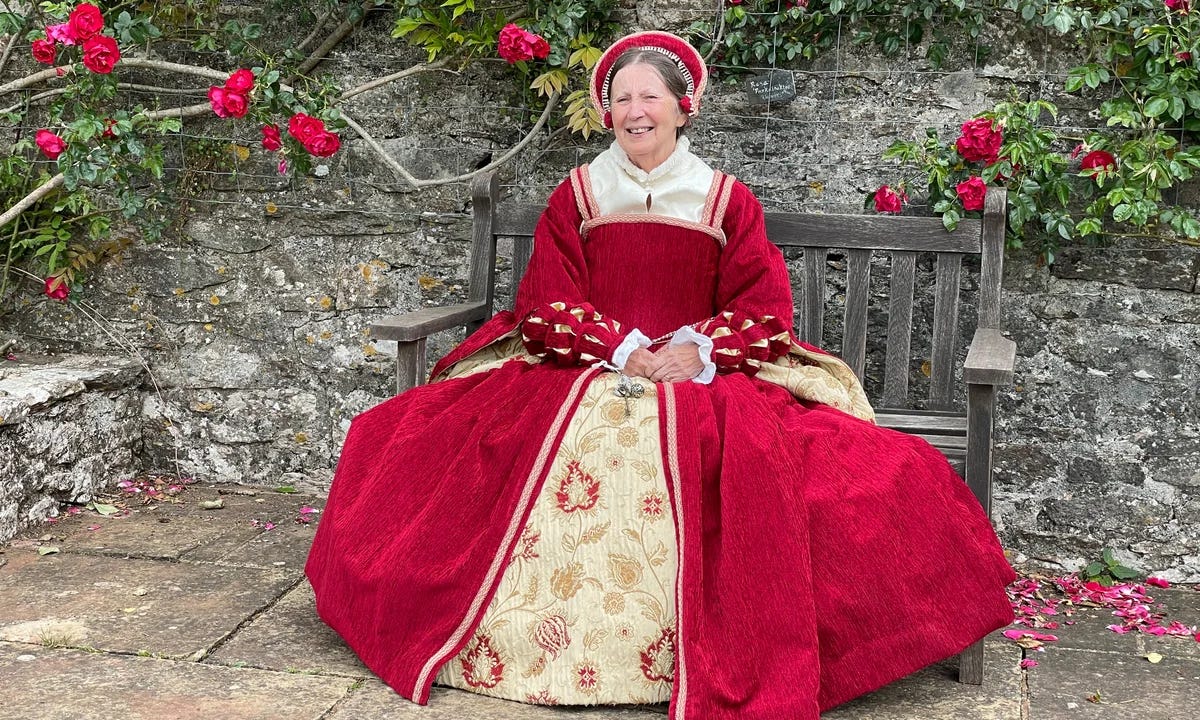
What distinguishes Rosemary’s approach is not simply the depth of her research, but the way she inhabits it—combining archival rigour with re-enactment, costume, and performance to recover something of the lived texture of the Tudor world. It is an approach that aligns closely with the spirit of Wolf Hall itself in its awareness that history is as much about people as it is about events.
Her subject will be Kat Ashley, aka Katherine Champernowne, who is one of those figures who sits quietly at the edge of the main historic narrative and yet, on closer inspection, proves indispensable to it. In 1536, at a moment of profound instability in the Tudor court, Thomas Cromwell recommended her to Henry VIII as a suitable attendant for the king’s young daughter, Elizabeth. It is an intriguing decision. Cromwell, so often understood through his legislative brilliance and political ruthlessness, is making a judgement not of policy, but of character.
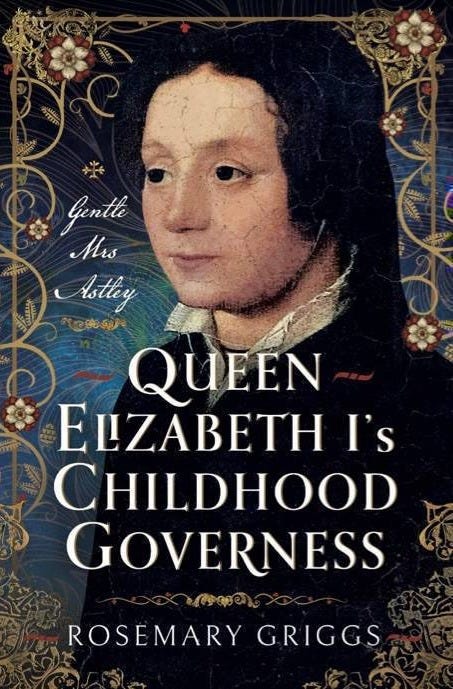
Her new book, Queen Elizabeth I’s Childhood Governess: Gentle Miss Astley (to be published August 2026), draws on original sources and a careful re-examination of long-held assumptions, and seeks to separate the historical Kat from the accumulated distortions of fiction and popular portrayal. Far from the familiar image of a “gossipy” attendant, Rosemary presents a woman who was highly educated, well connected, and positioned within networks of humanist and reformist thought close to the Tudor court . The book also revisits episodes such as the Thomas Seymour scandal, and questions whether judgements have been too readily accepted. What emerges is a more credible, and more consequential figure, one whose loyalty endured imprisonment, whose influence was recognised by Elizabeth in her elevation to Chief Gentlewoman of the Privy Chamber, and whose death in 1565 reportedly left the queen genuinely bereft.
Alongside her, David Griggs introduces another texture of the period through song—those fragments of everyday culture that rarely survive in official records but which would have shaped the emotional and imaginative world of Tudor England. The effect is not reconstruction so much as evocation: a sense, however fleeting, of what it might have felt like to inhabit that world rather than simply to analyse it.
For a weekend concerned with Magnificence—focused on the precarious height of Cromwell’s achievement—this session offers a necessary counterpoint. It reminds us that while Cromwell built systems that would endure, he also made choices about people that sustained the Tudor court from within. Kat Ashley stands as one of those choices, and through Rosemary’s careful imaginative re-enactment we are invited to see what followed from it.
Wolf Hall Weekend, taking place Saturday 6th and Sunday 7th June 2026 at All Hallows by the Tower.
The programme is now fully in place, the speakers confirmed, for our focused celebration of the work of Hilary Mantel and the world of her Wolf Hall Trilogy.
Saturday will be a day packed with celebrity speakers and panels presenting on a wide range of intriguing Wolf Hall topics, followed by a wonderful staged reading of The Mirror and the Light in the evening. Then on Sunday we will venture out on expert guided tours of the Tudor city of Thomas Cromwell.
There are now only a small number of seats remaining.
If you have been intending to come, now is the moment to secure your place.
We look forward to seeing you there!